
For many nonprofit organizations, the biggest financial question used to be simple: How much funding can we raise this year?
In 2026, there is a more important question:
How long can our organization keep moving if that funding changes?
That shift matters. Nonprofits are dealing with unpredictable funding, rising demand for services, changing donor priorities, and increasing pressure to do more with limited resources. Recent nonprofit research shows that financial health remains one of the sector’s biggest concerns.
And here is the surprising part: having money in the bank does not always mean a nonprofit is financially secure.
Cash Is Not Always the Same as Financial Freedom
Imagine a nonprofit has $500,000 sitting in its bank account. It sounds healthy, right?
Not necessarily.
Some of that money may be restricted for a specific program. Some may be committed to upcoming expenses. Some may depend on a grant agreement or reimbursement.
What really matters is how much flexible cash the organization has available to keep operating when something unexpected happens.
That is why financial resilience has become such an important conversation in the nonprofit world.
What Happens When Funding Arrives Late?
A grant can be approved today but arrive months later.
Meanwhile, payroll still needs to be processed. Rent still needs to be paid. Vendors still expect payment. Programs still need to operate.
This is where cash-flow planning becomes more than an accounting exercise.
A simple 90-day cash-flow forecast can help nonprofit leaders see potential gaps before they become emergencies.
Track:
Expected grants and donations
Accounts receivable
Payroll and benefits
Program expenses
Vendor payments
Major upcoming commitments
Unrestricted cash available
The goal isn't to predict the future perfectly. It's to avoid being surprised by it.
Your Reserves Are a Financial Seatbelt
Think of operating reserves as a seatbelt.
You hope you never need them—but you are grateful they are there when something goes wrong.
A 2026 New Jersey nonprofit survey found that 66% of respondents had cash reserves, while 25% reported having none. Among organizations with reserves, the amount varied significantly, from one to three months of operating funds to more than six months.
The important question isn't simply, "Do we have reserves?"
Ask instead:
"Do we have a reserve policy, and is our reserve large enough for the risks our organization actually faces?"
Don't Wait for a Crisis to Start Scenario Planning
Here is a simple exercise every nonprofit leadership team can try:
What if our largest grant is delayed by 90 days?
Then ask:
What if that grant is reduced by 25%?
And finally:
What if we lose it completely?
The answers can reveal weaknesses that a traditional annual budget may not show.
Current nonprofit research points to an increasingly unpredictable funding environment, with organizations reporting reductions across foundation, government, and individual-donor funding sources.
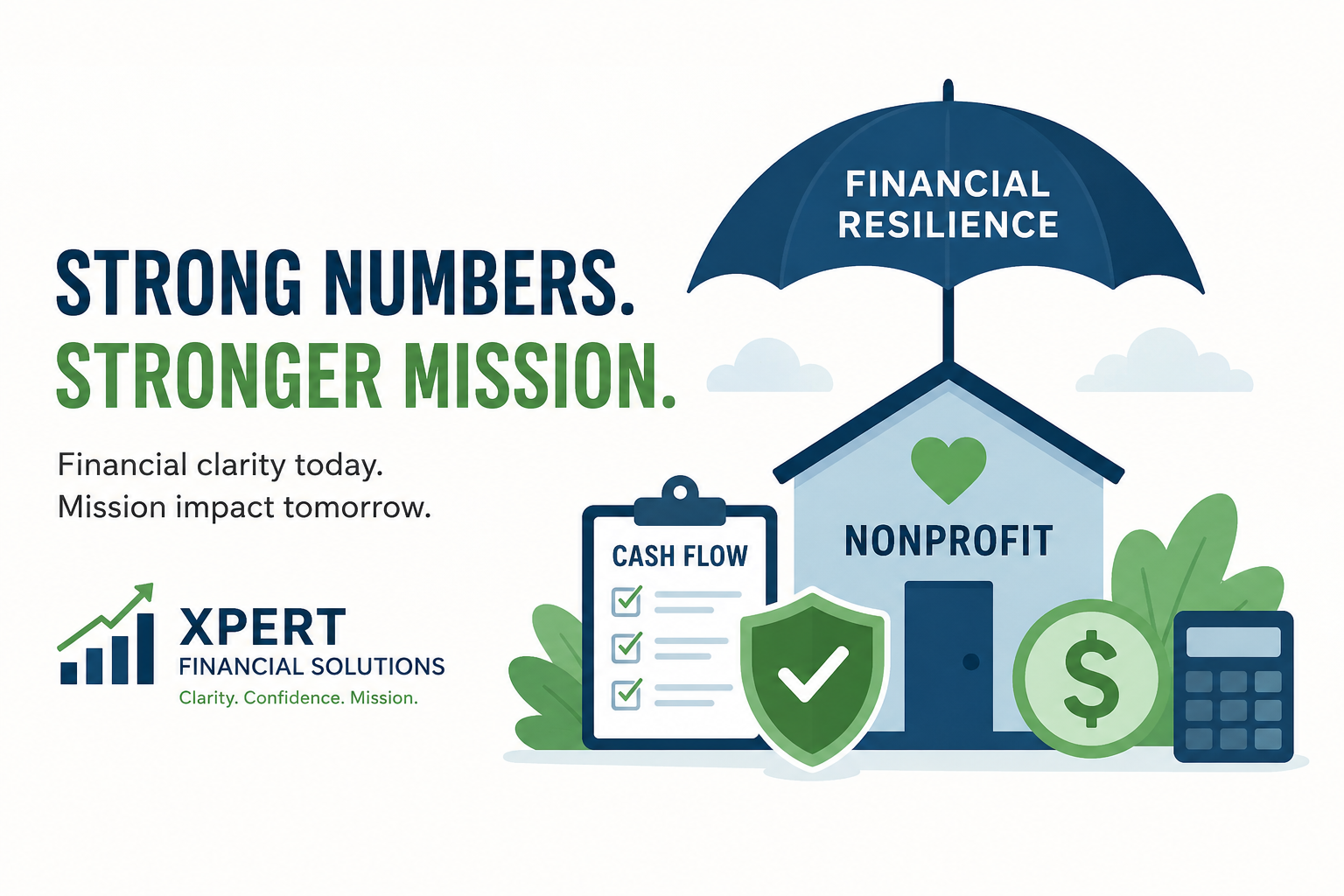
Stronger Numbers. Stronger Mission.
Financial management isn't about turning a nonprofit into a corporation.
It's about protecting the mission.
When leaders understand cash flow, reserves, restricted funding, revenue concentration, and future obligations, they can make better decisions sooner.
The strongest nonprofit isn't necessarily the one with the biggest budget. It's the one that knows what happens when the budget changes.
In 2026, financial resilience isn't just good accounting.
It's mission protection.
At Xpert Financial Solutions, we help nonprofit organizations gain clearer financial visibility through budgeting, reporting, cash-flow planning, and practical financial management—so leaders can spend less time reacting to financial surprises and more time advancing their mission.
← All insights
Nonprofit Finance
The Nonprofit Money Question Everyone Should Be Asking in 2026
How long can your organization keep moving if that funding changes?
Join the conversation
Comments
Share a thoughtful question or perspective. Comments are reviewed before they are published.